PROJECTS
Le Fils Des Étoiles
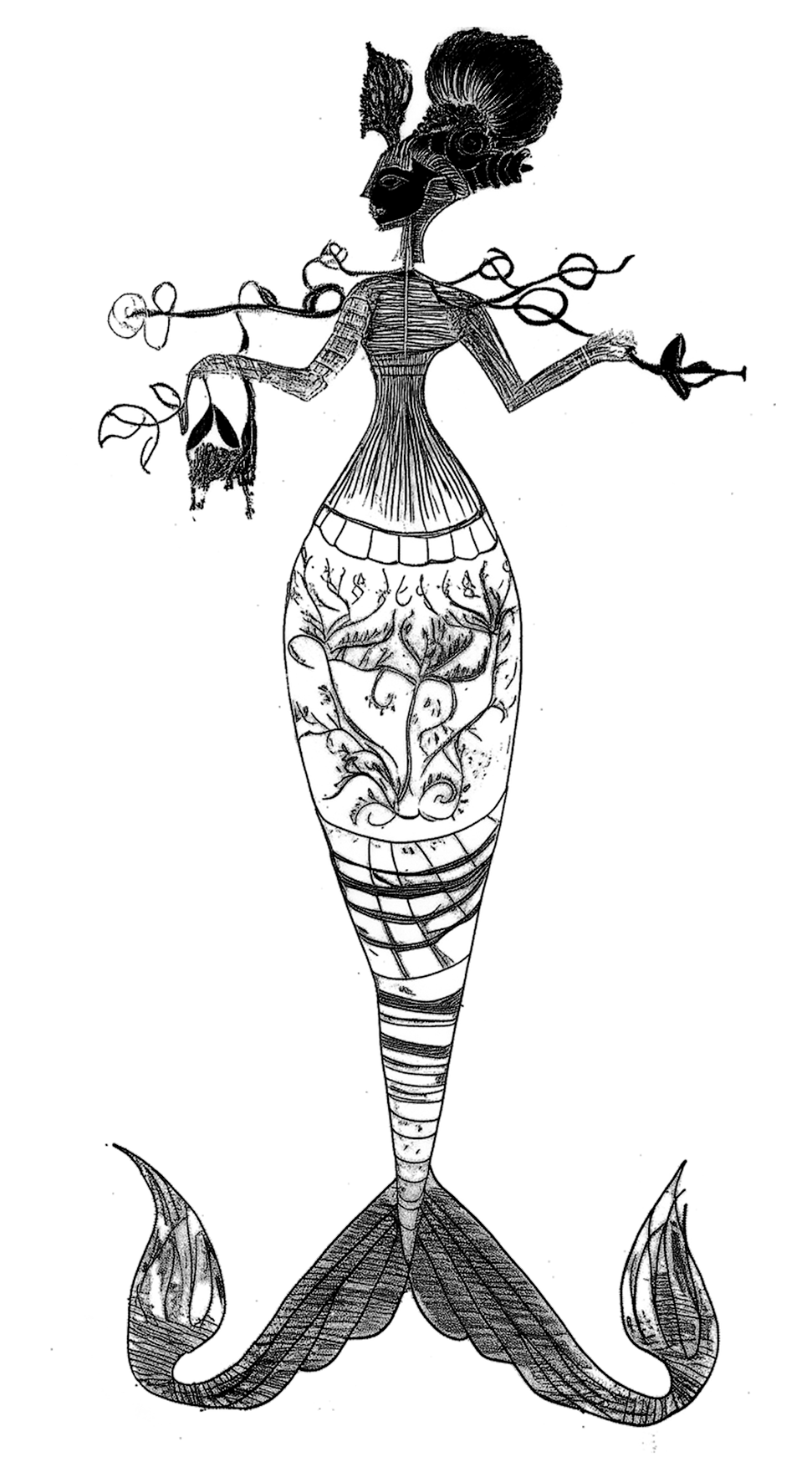
A ballet inspired by the world of Ancient Sumerian leader, Gudea, set to a new restoration of Erik Satie's 1891 score for Joséphin Péladan's theatre-work of the same name.

In 1892, occultism was all the rage in Paris, and a young Erik Satie found himself drawn into its orbit through the writer turned mystic Joséphin Péladan. Styling himself a modern reincarnation of an ancient Sumerian magus, Sâr Péladan (as he called himself), cultivated an aesthetic world steeped in symbolism, ritual, and imagined antiquity inspired by recent French excavations in the Middle East.
In March of that year, Péladan staged an ambitious artistic spectacle of a carefully curated exhibition (governed by his strict aesthetic rules), paired with concerts featuring music by his chosen pantheon of composers including Wagner, Beethoven, and Bach. More than 22,000 visitors passed through the exhibition, eager for a glimpse into this famously secretive world. The performances sold out night after night, with hundreds of seats added at premium prices as demand soared as socialites, dignitaries, and artists clamored for tickets.
The centerpiece of the opening night was the premiere of Péladan’s new play, Le Fils Des Étoiles, with music composed by Erik Satie. Set in the ancient Sumerian city of Girsu, the drama follows its ruler, Gudea, as he searches for a worthy successor. Just a decade earlier, the Louvre had acquired a remarkable group of statues of Gudea, carved from diorite, one of the hardest known stones, and preserved impeccably over millennia. These statues and objects, inscribed with texts recounting Gudea’s deeds, prayers, and hopes for his city, fueled the imaginative world of Péladan’s play, and his personal stylings..
To conjure what he imagined as the sound world of ancient Sumer, Satie’s 70 minute score called for two flutes and two harps.. The rest is a mystery. We do not know how much of the music was performed at the premiere, nor which instruments were actually used. What survives today is a piano reduction. Vexations withstanding, the piece is Satie’s longest work. And yet, one hundred years after his death, no full reconstruction of its original scoring has been attempted. Until now!

Collaborators
Dr. Paul Delnero // Assyriologist, Johns Hopkins University
With special thanks to
Dr. Jonathan Taylor, British Museum
Katy Blanchard, Penn Museum
Dr. Richard Zettler, University of Pennsylvania
Dr. Jonathan Taylor, The British Museum
Miles Cohen & Philadelphia Chamber Music Society
Fun stuff

Emi with the legend Dr. Richard Zettler at the Penn Museum

Emi with Katy Blanchard, the Penn Museum's Keeper of the Near Eastern Collection who shared so much knowledge and time!
THE NEW YORK TIMES
Ah, Finally, Ancient Clay Tablets for Dessert
